
• What is AI Deepfake Harassment?
• How Can Deepfakes Create a Hostile Work Environment?
• Is an Employer Liable for Off-Duty Conduct?
• Are There New Laws to Protect Victims?
• What This Means for Employees
• How to Protect Yourself from Deepfake Harassment
• Contact an Employment Lawyer
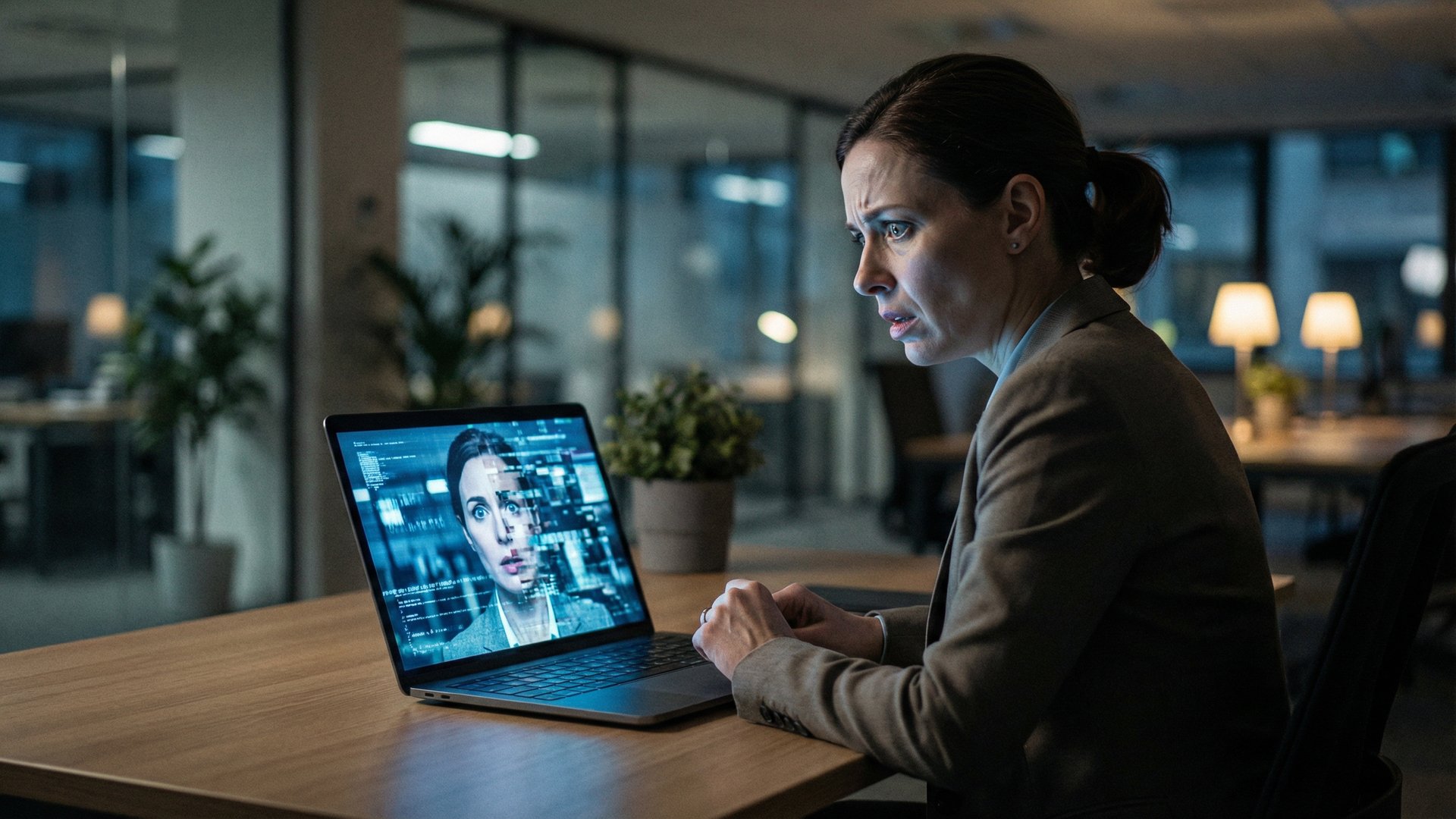
The rise of artificial intelligence has created a new and disturbing form of workplace harassment: the AI “deepfake.” Using sophisticated software, harassers can now generate realistic but entirely fake images, videos, and audio clips of coworkers. These deepfakes are often sexually explicit, demeaning, or racist, and they are increasingly at the center of employment lawsuits.
When this AI-generated content targets an employee based on their gender, sexual orientation, race, or other protected characteristic, it can create an illegal hostile work environment. Understanding your rights is the first step to fighting back.
What is AI Deepfake Harassment?
Deepfake harassment involves using AI to create false content that humiliates, intimidates, or demeans a person. Recent court cases show how this technology is being weaponized in the workplace:
•Sexual Harassment: A former TV meteorologist in Tennessee, Bree Smith, filed a federal lawsuit alleging her employer failed to act after she was targeted by fraudulent, sexualized deepfake images. She claimed this was part of a broader culture of sexism and was the “last straw” that forced her to leave her job.
•Harassment Based on Sexual Orientation: In Washington, a state trooper, Collin Pearson, sued his employer, alleging that coworkers created and circulated a deepfake video depicting him in a derogatory and sexualized way to mock his sexual orientation.
•Racial and Antisemitic Harassment: A high school athletic director in Maryland was sentenced to jail after using AI to create a fake audio recording of his principal making racist and antisemitic comments. The principal, who was targeted after a negative performance review of the director, later sued the school district.
These cases demonstrate that courts are beginning to grapple with how existing harassment laws apply to this new technology.
How Can Deepfakes Create a Hostile Work Environment?
Under Title VII of the Civil Rights Act, harassment becomes illegal when it is so severe or pervasive that it creates a “hostile work environment.” The legal standard doesn’t change just because the harassment is digital. A deepfake can contribute to a hostile work environment if it is based on a protected characteristic (like sex, race, or religion) and negatively impacts your ability to do your job.
Even if a deepfake is created and shared outside of work hours, it can still create a hostile work environment. The key question is whether the conduct “seeps into the workplace.” If coworkers are discussing the deepfake, sharing it on company time, or treating the victim differently because of it, the employer may have a legal responsibility to intervene.
Is an Employer Liable for Off-Duty Conduct?
An employer’s responsibility to address harassment doesn’t stop at the office door. Courts have consistently held that employers can be held liable for failing to address off-duty conduct that creates a hostile work environment.
The employer doesn’t need to have created the deepfake to face liability. Where employers get into trouble is failing to act reasonably to correct the situation when they knew or should have known that this was occurring.
If you report deepfake harassment to your employer, they have a legal duty to take prompt and effective action to stop it. This includes conducting a thorough investigation and taking disciplinary action against the responsible parties. Ignoring the complaint or conducting a sham investigation can expose the company to significant legal liability, as alleged in the Bree Smith lawsuit.
Are There New Laws to Protect Victims?
While Title VII is the primary federal law addressing workplace harassment, new laws are emerging to specifically target the creation and distribution of deepfakes. In May 2025, the federal TAKE IT DOWN Act was signed into law. This act criminalizes the creation of nonconsensual intimate imagery, including AI-generated “digital forgeries,” and requires online platforms to remove such content upon request.
Many states have also passed their own laws providing civil and criminal penalties for creating and sharing malicious deepfakes. These laws provide another layer of protection for victims.
What This Means for Employees
AI-generated harassment is real harassment. The use of new technology does not give harassers a free pass, nor does it absolve employers of their responsibility to provide a safe workplace. If you are the target of a deepfake created by a coworker, manager, or even an anonymous source, your employer has a duty to take your complaint seriously and act swiftly to stop the harassment.
How to Protect Yourself from Deepfake Harassment
If you are being targeted by deepfake harassment, it is crucial to take immediate steps:
1. Preserve Evidence: Save copies of the deepfake images, videos, or audio. Take screenshots of any related messages, emails, or social media posts.
2. Report the Harassment in Writing: Notify your supervisor and HR department in writing. Clearly state that you are being subjected to a hostile work environment based on your protected class (e.g., sex, race, sexual orientation).
3. Document Everything: Keep a detailed log of every incident, including dates, times, witnesses, and what was said or done. Document your employer’s response (or lack thereof).
4. Use Platform Reporting Tools: If the content is online, use the platform’s reporting tools to have it taken down under the TAKE IT DOWN Act.
Contact an Employment Lawyer
Being the victim of deepfake harassment can be a deeply violating and stressful experience. You do not have to face it alone. If your employer has failed to protect you from a hostile work environment created by AI-generated content, contact our office for a confidential consultation to understand your legal options.
Contact us today to tell us about your case.
References